
Hall Moss Business Park
Bolton Rd, Darwen, BB3 2TT
07711 306605
Steve · bookings & enquiries
07543 129437
Adam · bookings & enquiries
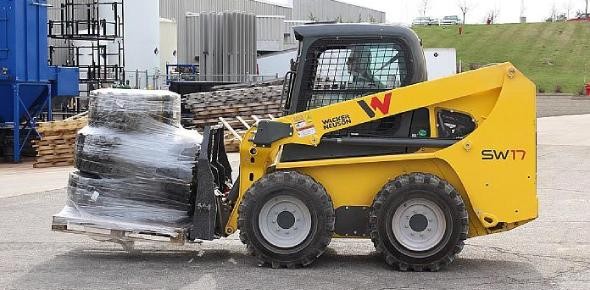
To provide thorough practical and theory plant training in operating a Skid Steer Loader,to enable the candidate to competently and safely carry out the role and pass the Theory and Practical Tests.
Skid-steer loaders present a number of risks to workers. The most types of injuries caused by skid-steer loaders are rollovers on soft or steep ground and crush injuries when safety features have been bypassed or removed, and during maintenance.
Workers can be:
In recent years there have been several fatal accidents involving skid steer loaders. Operators have been crushed when they exited skid steer loaders with the lift arms raised or when they operated controls from outside the cab. They have also been run over after leaving the controls with the engine running.
In a recent accident, a worker removed a loader’s lift arm cylinders. He left the bucket in an elevated position, approximately 1.4 metres (4.5 feet) off the floor. The bucket and arms were blocked by placing two braces between the front of the loader and the bucket mounting plate. The manufacturer’s instructions state that when lift cylinders are removed, the loader bucket and arms must be less than half a metre (1.5 feet) above the ground and must be placed on secure blocking. Additional blocks may have to be placed at the rear of the machine to keep the front wheels from lifting. When the worker tried to reinstall the lift arm cylinders five days later, he found that the lift cylinder pistons needed to be adjusted in order to refit the arms. He started the engine, then moved between the raised arms and the frame, leaning over to activate the foot control that moves the lift cylinders. Over the five days in the raised position, the bucket pivot had crept out of position, forcing the two braces from the secure position. As the worker activated the foot control, the bucket tilted, dislodging both braces. The now unrestrained bucket and arms swung down, crushing and killing the worker.
Safe work practices
An operator of a skid steer loader stopped the loader at the edge of an excavation. The operator started to lower the bucket. The loader tipped forward and fell into the excavation—narrowly missing a natural gas pipeline. The operator was not injured. The primary cause of the accident was the improper use of a light material bucket. The skid steer loader’s light material bucket had been modified, further increasing the volume capacity of the bucket and also adding extra weight to the bucket itself.
Safe work practices:
A worker was leaning over the engine of a skid-steer loader, troubleshooting a mechanical problem. The loader operator was seated in the cab with the engine running. The boom lock pins were not engaged to prevent the loader’s lift arms from moving. The lift arms lowered unexpectedly, pinning the worker between the crossbar of the lift arms and the engine compartment. The worker suffered fatal injuries.
Skid Steer Daily Checks Click Here
Skid Steer Study Notes Click Here
Skid Steer CITB Notes Click Here
Skid Steer Safety Questions Click Here
Skid Steer Safety Questions 2 Click Here
HSE Guidance Safe Use Of Vehicles On Construction Sites Click Here
Mobile Plant Reversing & Visibility Aids click here
Health & Safety Advice For Plant Operations Click Here
Should you have any questions then please do not hesitate to call. We do not offer any training to members of the public — we only offer training to companies.
Four quick steps — we come back the same working day where we can.
Thank you — we'll be in touch shortly.